

Package Unit vs Split System Installation Houston - Professional Quality Service | Tell Projects
Professional quality service for Houston, TX homeowners
Get Free Quote - (832) 591-7991Package Unit vs Split System Installation Houston
Commercial HVAC Systems: Choosing the Right Solution for Your Houston Business
When it comes to commercial HVAC installation in Houston, business owners face a critical decision: package unit vs split system installation. Both options offer distinct advantages for different commercial applications, and understanding these differences is crucial for making an informed investment that will serve your business for decades to come.
Houston's unique climate, characterized by hot, humid summers and mild winters, presents specific challenges for commercial HVAC systems. With temperatures regularly exceeding 95°F and humidity levels often above 70%, businesses need reliable cooling solutions that can handle the intense Texas heat while maintaining energy efficiency and indoor comfort.
This comprehensive guide will help you understand the fundamental differences between package units and split systems, analyze cost implications for Houston businesses, evaluate energy efficiency considerations, and provide insights specific to the Houston commercial real estate market.
What is a Package Unit HVAC System?
A package unit is a self-contained HVAC system that houses all major components in a single outdoor unit. These systems are commonly installed on rooftops of commercial buildings and are particularly popular in Houston's commercial real estate market due to their space efficiency and straightforward installation process.
Package Unit Components
Package units integrate all essential HVAC components into one compact unit:
- Compressor (the heart of the refrigeration cycle)
- Condenser coil (rejects heat outdoors)
- Evaporator coil (absorbs heat from indoor air)
- Fan motors (both condenser and supply air)
- Electrical controls and safety devices
- Air filter section
Package Unit Advantages
Package units offer several benefits for Houston commercial properties:
- Space Efficiency: All components in one unit saves valuable indoor space
- Easier Installation: Single-unit installation reduces complexity
- Simplified Maintenance: All components accessible from roof level
- Lower Initial Cost: Generally 15-25% less expensive than split systems
- Faster Installation: Typically completed in 1-3 days
- Ideal for Retrofits: Perfect for buildings without existing ductwork
What is a Split System HVAC?
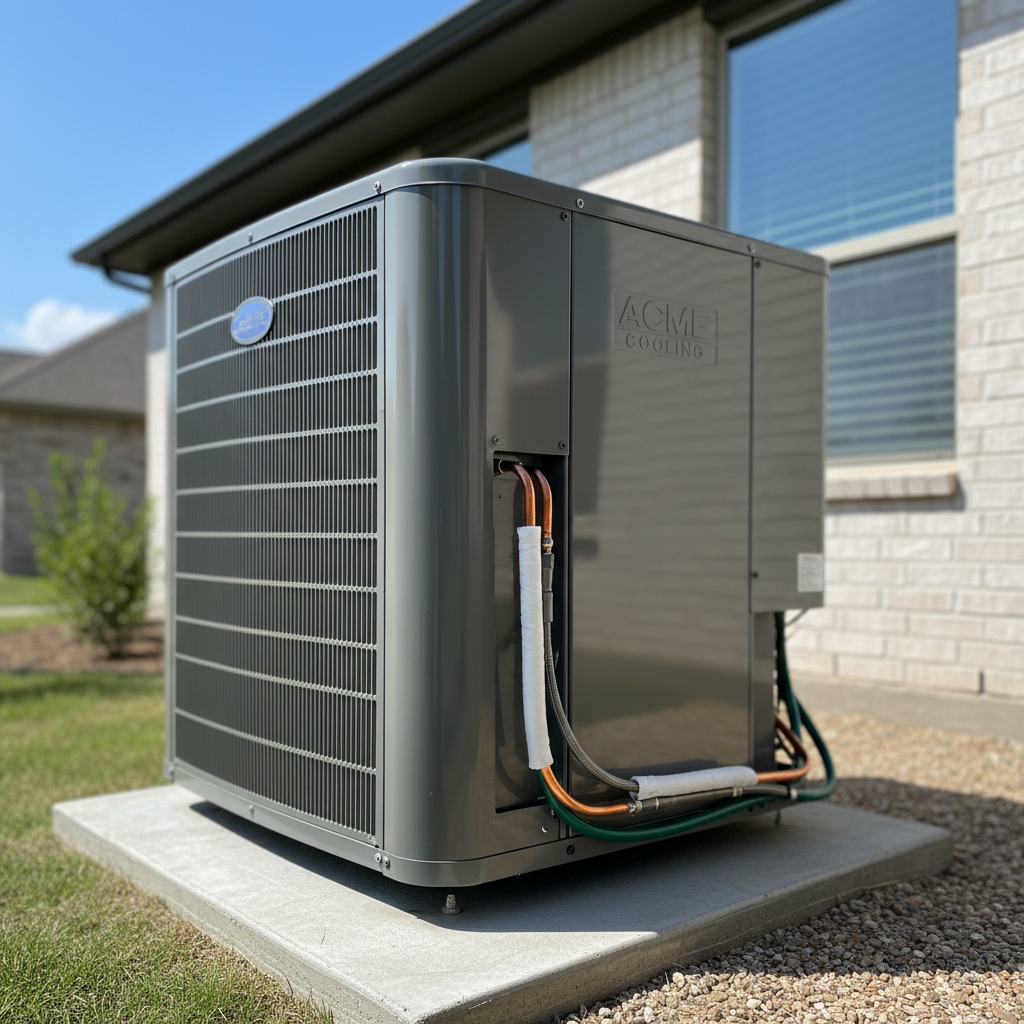
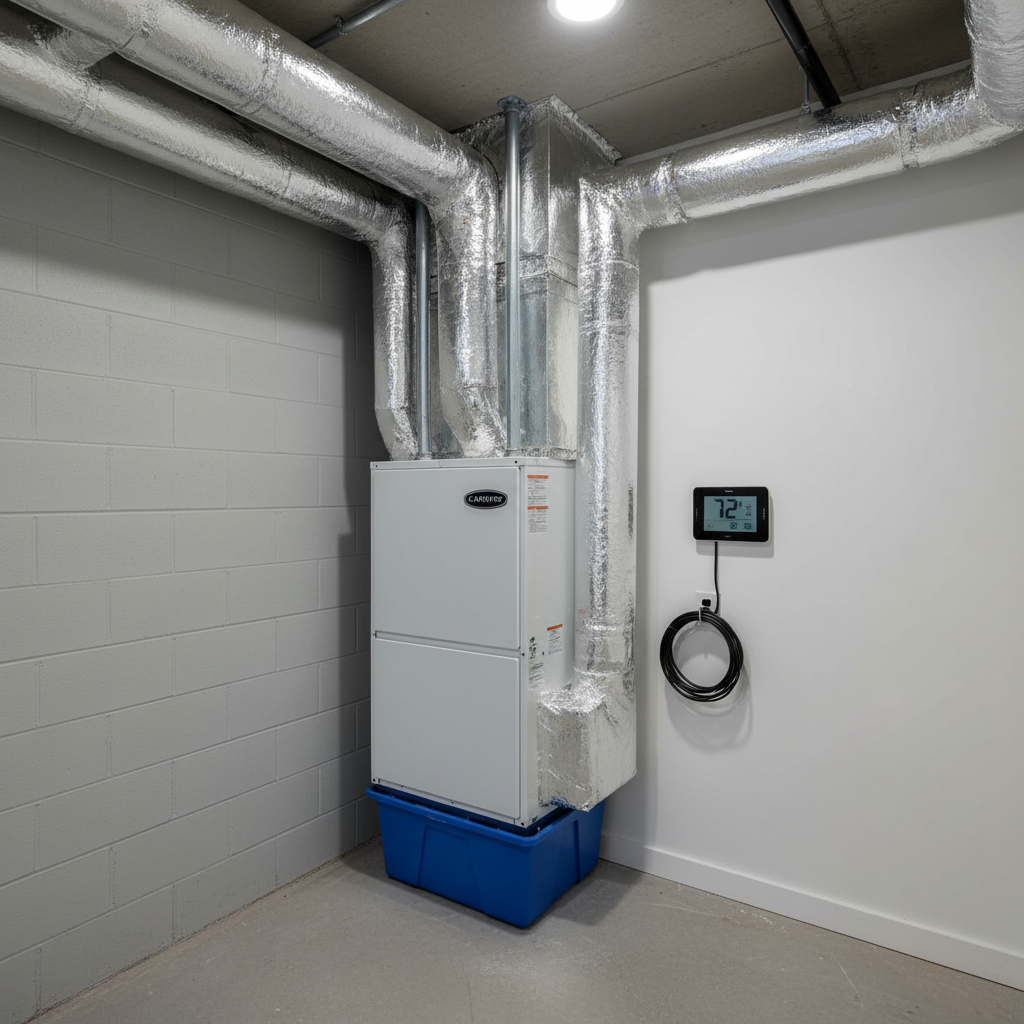
A split system HVAC divides components between indoor and outdoor units. The outdoor unit contains the compressor and condenser coil, while the indoor unit houses the evaporator coil, air handler, and often the furnace in heating climates. This configuration offers more flexibility in system design and operation.
Split System Components
Split systems require coordination between multiple components:
- Outdoor Unit: Compressor and condenser coil
- Indoor Unit: Evaporator coil and air handler
- Ductwork System: Distribution network throughout the building
- Thermostat: Control system for temperature regulation
- Refrigerant Lines: Connect indoor and outdoor units
Split System Advantages
Split systems provide unique benefits for Houston commercial applications:
- Higher Efficiency: Modern split systems achieve SEER ratings up to 22
- Better Temperature Control: Zoning capabilities for different areas
- Quieter Operation: Indoor unit operates at lower noise levels
- Flexible Installation: Indoor unit can be placed strategically
- Individual Room Control: Multi-zone systems for large facilities
- Longer Lifespan: Typically last 15-20 years with proper maintenance
Need Expert HVAC Installation in Houston?
Get a free consultation and quote for your commercial HVAC system. Our certified technicians specialize in both package unit and split system installations.
Call (832) 591-7991Package Unit vs Split System Installation Cost Comparison in Houston
Understanding the financial implications of your HVAC investment is crucial for Houston business owners. The cost difference between package units and split systems can significantly impact your bottom line, especially when considering long-term operational expenses.
Package Unit Installation Costs
Package unit installation in Houston typically ranges from $3,500 to $8,000 depending on system size and building complexity:
- 10-ton unit: $3,500 - $5,000
- 15-ton unit: $5,000 - $6,500
- 20-ton unit: $6,500 - $8,000
Factors affecting package unit costs in Houston include:
- Rooftop accessibility and structural requirements
- Electrical upgrades for larger units
- Ductwork modifications or installations
- Permit and inspection fees
- Building size and layout complexity
Split System Installation Costs
Split system installation costs are generally higher, ranging from $5,000 to $12,000:
- 10-ton system: $5,000 - $7,500
- 15-ton system: $7,500 - $9,500
- 20-ton system: $9,500 - $12,000
Additional costs for split systems include:
- Indoor air handler installation
- Refrigerant line installation between units
- More complex ductwork requirements
- Longer installation timeline (3-5 days)
- Higher labor costs due to complexity
Energy Efficiency Analysis: Package Unit vs Split System
Energy efficiency is a critical consideration for Houston businesses, where cooling costs can represent a significant portion of operational expenses. Understanding the efficiency differences between these systems can result in substantial savings over the system's lifespan.
SEER Ratings Comparison
Seasonal Energy Efficiency Ratio (SEER) measures cooling efficiency:
- Package Units: 14-18 SEER (Energy Star minimum 14)
- Split Systems: 16-22 SEER (High-efficiency models)
The higher efficiency of split systems translates to 10-20% lower energy consumption in most applications. For a typical Houston commercial building spending $3,000 monthly on cooling, this could mean annual savings of $3,600-$7,200.
Houston-Specific Efficiency Considerations
Houston's climate creates unique efficiency challenges:
- High Humidity: Split systems with variable-speed compressors handle humidity better
- Long Cooling Season: Efficiency differences compound over 8-9 months of use
- Heat Island Effect: Urban buildings may benefit from split system zoning
- Utility Rates: Houston's tiered electricity pricing rewards efficiency
Installation Process Differences
The installation process varies significantly between package units and split systems, affecting project timelines, disruption to business operations, and overall project management.
Package Unit Installation Process
Package unit installation in Houston typically follows this timeline:
- Site Assessment: Roof inspection and structural evaluation (1 day)
- Permit Acquisition: Municipal permits and utility coordination (2-3 days)
- Equipment Delivery: Crane or lift installation of unit (1 day)
- System Installation: Electrical, refrigerant, and duct connections (1-2 days)
- Testing and Commissioning: System startup and performance verification (1 day)
Split System Installation Process
Split system installation is more complex and time-intensive:
- Design Phase: Ductwork layout and system sizing (3-5 days)
- Indoor Unit Installation: Air handler placement and electrical work (1-2 days)
- Outdoor Unit Installation: Compressor placement and foundation (1 day)
- Ductwork Installation: Distribution system throughout building (2-4 days)
- Refrigerant Connection: Line installation and system charging (1 day)
- System Testing: Performance verification and balancing (1 day)
Houston Climate Considerations
Houston's subtropical climate presents specific challenges that influence HVAC system selection:
Temperature Extremes
Houston experiences:
- Summer temperatures regularly exceeding 95°F
- Over 100 days per year above 90°F
- Winter temperatures rarely dropping below freezing
- High humidity levels (60-80%) year-round
Impact on HVAC Selection
Climate factors affecting system choice:
- Heat Rejection: Package units may struggle with heat rejection on extremely hot days
- Humidity Control: Split systems with variable-speed technology excel at dehumidification
- Corrosion Resistance: Coastal areas require corrosion-resistant materials
- Storm Protection: Rooftop units need hurricane straps in hurricane-prone areas
Houston's Extreme Heat Damaging Your HVAC?
Don't wait for a breakdown during the hottest months. Schedule your preventive maintenance today.
Schedule Service NowMaintenance Requirements Comparison
Proper maintenance is essential for both system types, but the approach differs significantly between package units and split systems.
Package Unit Maintenance
Package units offer maintenance advantages:
- All components accessible from roof level
- Faster service appointments (no indoor access needed)
- Lower maintenance costs due to accessibility
- Simpler troubleshooting with integrated components
- Reduced risk of indoor property damage during service
Annual maintenance tasks include:
- Coil cleaning (condenser and evaporator)
- Fan motor inspection and lubrication
- Refrigerant level verification
- Electrical connection inspection
- Filter replacement
Split System Maintenance
Split systems require more comprehensive maintenance:
- Indoor and outdoor unit service required
- Ductwork inspection and cleaning
- Refrigerant line inspection
- Indoor air quality assessment
- Zoning system verification
Annual costs for split system maintenance typically run 20-30% higher than package units due to the complexity and time required for comprehensive service.
Visit Our Houston Showroom
Stop by our location to discuss your remodeling project in person. We're conveniently located in Houston and serve all surrounding areas.
Address
5328 Prudence Dr.
Houston, TX 77045
Phone
Hours
Mon-Fri: 8AM-8PM
Sat: 8AM-7PM
Sun: 10AM-6PM
Ready to Transform Your Home?
Contact Tell Projects today for a free consultation. Our expert team is ready to bring your vision to life!
What Our Customers Say
See why Houston homeowners trust Tell Projects for their remodeling needs